

Introduction: Why Homework Becomes a Battleground
In many homes, homework is the most emotionally charged part of the day. Children feel overwhelmed, tired, or avoidant. Parents feel torn between wanting to help and wanting to build independence. Even simple assignments can turn into arguments, tears, or shutdowns.
The good news is that homework struggles are predictable—and therefore preventable.
Homework places heavy demands on executive function skills that are already depleted by the end of the school day. When families shift from “trying harder” to building better systems, evenings become calmer and more productive.
This post explains why homework is so hard and outlines practical strategies to reduce conflict and support successful work time.
1. Why Homework Is So Hard After School
A. Executive Function Is Depleted
School requires constant use of:
- Transitions
- Working memory
- Inhibition
- Attention
- Social navigation
By late afternoon, executive function reserves are low. Expecting peak performance at this time often leads to frustration on both sides.
B. Homework Requires the Most Demanding EF Skills
Homework depends on:
- Task initiation
- Planning
- Shifting between subjects
- Persistence
- Self-monitoring
These skills do not develop automatically. They require structure and support.
C. Home Has More Distractions
At home, children must compete with:
- Siblings
- Screens
- Toys
- Pets
- Noise
- Hunger
- Fatigue
The same task that feels manageable at school can feel impossible at home.
D. Parents and Kids Have Competing Goals
Parents prioritize completion and responsibility.
Children prioritize relief and rest.
When these goals clash, power struggles emerge.
2. Build a Homework Routine Kids Can Actually Follow
A. Start With a Decompression Window
Before homework begins, allow 15–20 minutes for:
- Snack and hydration
- Movement
- Quiet time
A regulated brain works faster and more efficiently than a stressed one.
B. Use a Consistent Workspace
Predictability supports focus.
A helpful workspace includes:
- Writing tools
- Extra paper
- Charger
- Timer
- Sensory supports
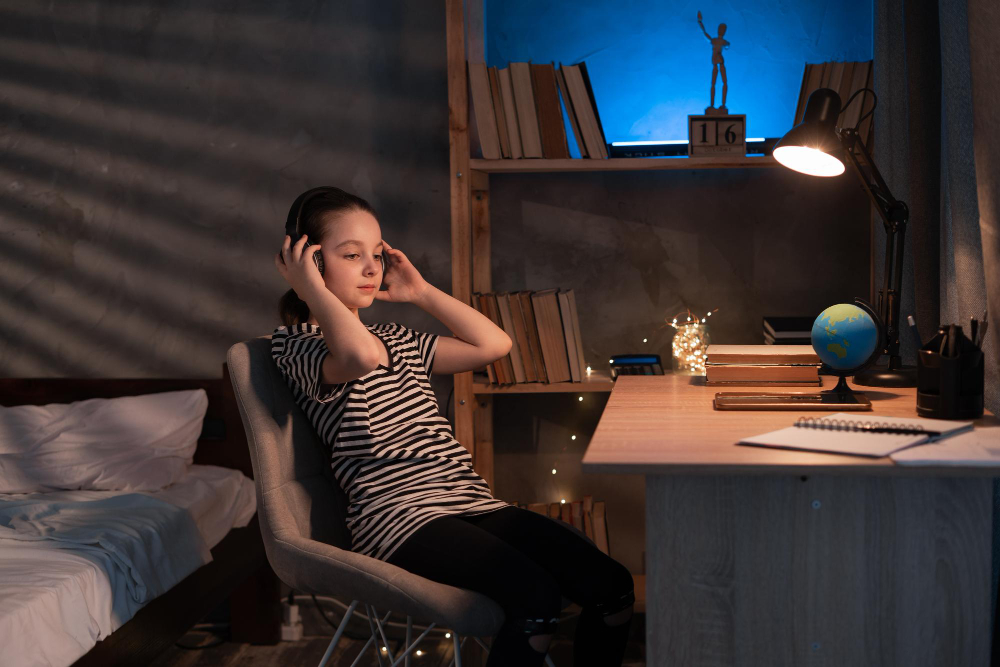
Avoid bedrooms when possible, as they increase distraction.
C. Create a “Homework Launch Routine”
Instead of jumping straight into work, use a simple ritual:
- Check the planner or portal
- List assignments
- Estimate time for each
- Choose the first task
This lowers overwhelm and supports initiation.
D. Break Homework Into Manageable Chunks
Large tasks trigger resistance.
Use:
- Visual timers
- Checklists
- “Just start for five minutes” rules
- Built-in brain breaks
Small steps reduce avoidance and build momentum.
3. Tools That Make Homework Easier
- Visual timers help children see time and effort
- Whiteboards reduce fear of mistakes
- Color coding improves organization and retrieval
- Fidgets and sensory tools support regulation
- Body-doubling (sitting nearby) improves initiation and persistence
These tools support the brain—they don’t “spoil” kids.
4. Parent Scripts That Reduce Homework Stress
Instead of:
“Just focus!”
Try:
- “What part feels hard to start?”
- “Do you want to start together?”
- “Let’s pick the first step.”
- “Do you need a movement break?”
Instead of:
“You know this—just do it!”
Try:
“You’re overwhelmed, not incapable. Let’s break it down.”
Language matters. Support reduces resistance.
5. When Homework Should Not Be a Battle
If homework consistently causes:
- Tears
- Shutdowns
- Hours of work
- Late nights
- Ongoing family conflict
…it may signal a mismatch between expectations and developmental capacity.
Families can advocate for:
- Reduced volume
- Modified assignments
- Extended time
- Alternative formats
Homework should reinforce learning—not harm mental health.
Conclusion: Homework Can Be Calmer
Homework doesn’t have to be the hardest part of the day. With predictable routines, regulation supports, clear steps, and realistic expectations, evenings become smoother—and children build confidence in their ability to manage tasks.
Homework success is not about pressure.
It’s about systems that support executive function.